The mango that broke a market
It is peak mango season in India. The Alphonso harvest is at its richest, the Kesar at its most fragrant.
UAE’s decision to exit OPEC could reshape oil supply dynamics, opening room for India to secure better prices, reduce costs and strengthen long-term energy partnerships.




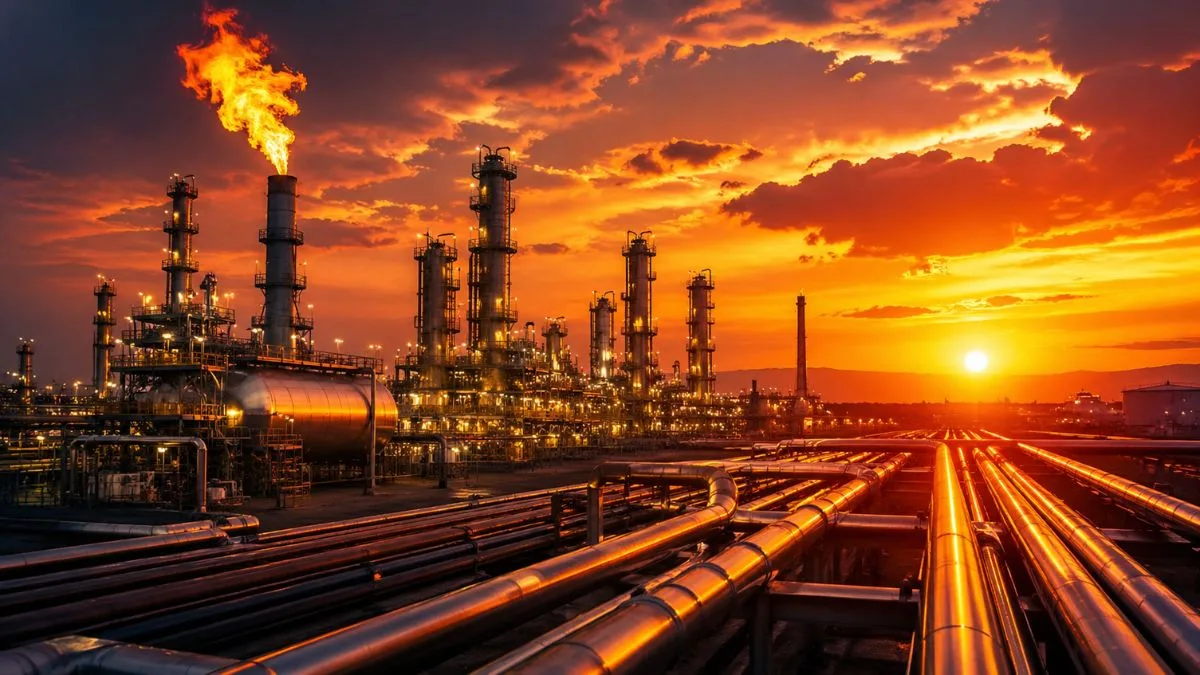
UAE’s exit from OPEC could allow higher oil production, potentially impacting global prices and benefiting major importers like India over time.
The big picture: The United Arab Emirates’ decision to exit Organization of the Petroleum Exporting Countries (OPEC) and OPEC+ (an alliance of oil-producing countries) from May 1 signals a shift in how global oil markets may function and, over time, could work in India’s favour.
OPEC’s strength comes from coordinated production cuts that keep prices elevated. The UAE stepping out weakens that discipline.
Advertisement
Former diplomat Ashok Sajjanhar called the move a “game changer” for oil trade, pricing and production, with wider geopolitical implications.
Advertisement
For India, which consumes about 5.5 to 5.8 million barrels of crude a day and imports nearly 90 per cent of it, even a small price moderation matters.
Analysts say the benefit for India will depend on how quickly markets stabilise.
Anindya Banerjee, Head of Research for Currency and Commodities at Kotak Securities, said the move could be “bearish for oil prices” once supply flows normalise.
Any increase in output from a reliable partner like the UAE strengthens India’s long-term energy security.
The UAE’s exit may open new room for bilateral engagement.
Former ambassador Navdeep Singh Suri said India could benefit in two ways. First, higher UAE production could help ease prices. Second, the move allows more flexibility for bilateral deals that were earlier constrained by OPEC’s production framework.
Officials also indicated that India could explore long-term supply agreements with the UAE without being bound by cartel restrictions.
Location works in India’s favour here.
Compared to suppliers like the US, Russia or Africa, the UAE is closer to India. Higher imports from the region could also mean lower shipping costs, which in turn helps bring down India’s overall import bill.
The move also fits into a larger shift in how global energy trade is evolving.
Banerjee said this could support a gradual move towards a more multipolar system, where countries start using currencies like the rupee for oil trade instead of relying entirely on the US dollar.
This decision has been building for some time.
Suri pointed out that the UAE has been unhappy with OPEC quotas since 2021, when its production limits did not match its actual capacity.
The UAE wants greater control over its output as it looks to maximise oil revenues and fund diversification into sectors like AI, data and infrastructure.
The impact will not be immediate.
A report by ASK Wealth Advisors noted that oil prices may not fall in a straight line and could become more volatile in the short term due to geopolitical risks and supply disruptions.
Sagar Adani, Executive Director at Adani Green Energy, also said “time will tell” whether the move stabilises or disrupts markets, adding that India’s priority should remain building energy resilience.
The UAE’s exit does not change India’s energy equation overnight.
But over time, it opens up space for more flexible sourcing, potential price benefits and deeper energy ties with a key strategic partner.
Advertisement